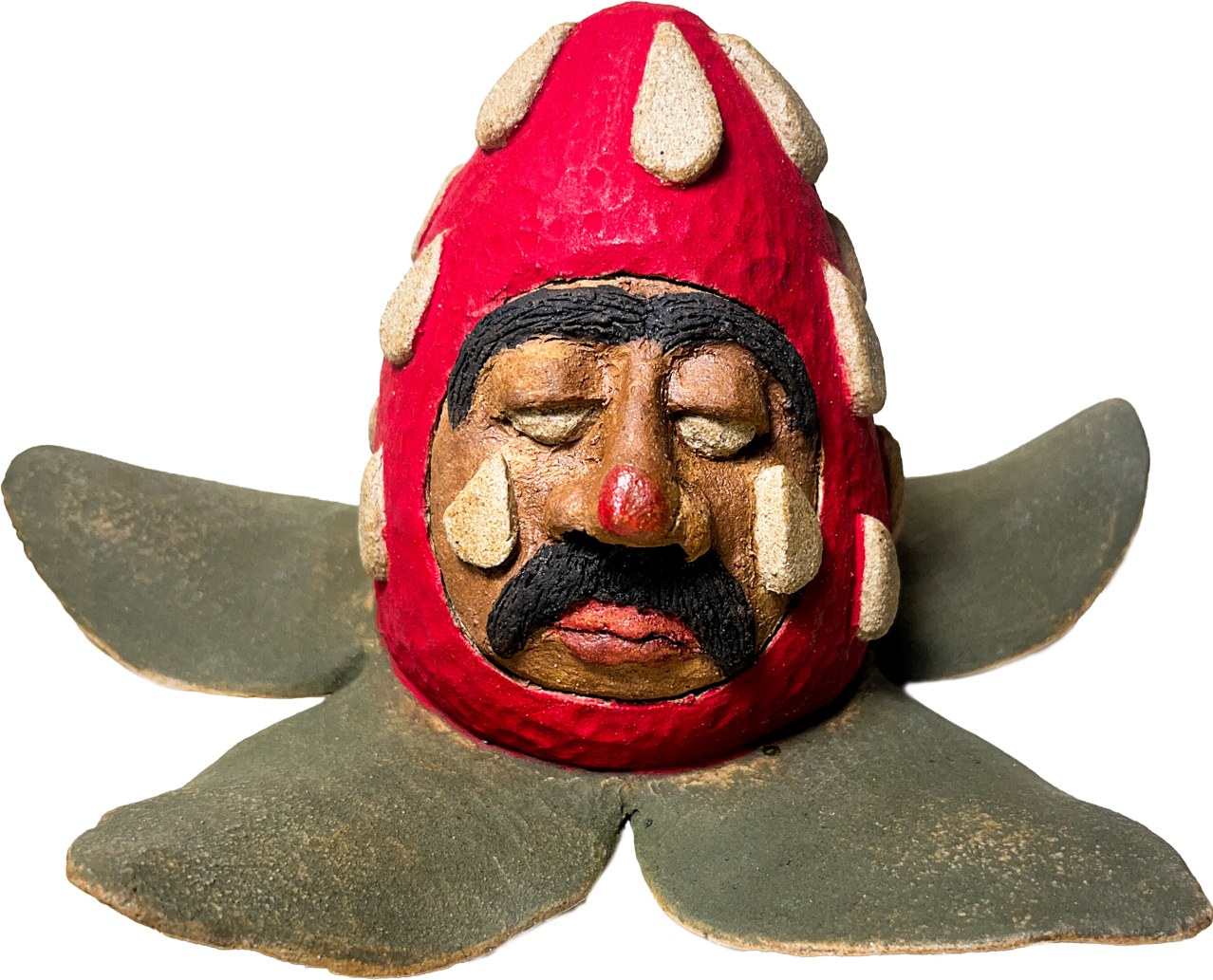
The ideas behind my artwork can be split into three categories: an exploration of myself, an investigation of cultural authenticity, and a pushback on societal norms. These concepts are displayed through a bright neo-pop aesthetic stemming from my own blend of rasquachismo, mesofuturism, and payaseria.
My autorretrato practice, a sad clown approach to self-portraiture, lets me reflect on childhood nostalgia and explore my queerness. I view clowns through a queer lens and as an expression of an inner identity free from shame, cringe, and social norms. This identity employs the clown as a mask to wear as defense from these factors until the inner self can truly be free. My specific practice of self-portraiture looks to the ego and the unashamed depiction of itself for inspiration. This leveraging of payaseria keeps things light while dealing with heavier internal topics that I might not want to address head on.
Within my muralism and illustration, I create flat work that begins in the digital realm to later cross into the physical. My style of illustration is derived from images found in mesoamerican codices that I extend into a mesofuturistic visual language. My depictions use bright colors and bold simple shapes to veil over dark undertones that require a bit of depth, but offer an inviting passage of understanding to the curious viewer. Murals are an important part of myth-making and identity for communities. I rely on the tropes and traditions of Mexican and Chicano muralism, but add my own viewpoints and sympathies. By providing my own thoughts, I challenge beliefs of what is considered authentic cultural production.
I use items stolen from the streets to poke at notions of morality and scarcity. Securing my art material demands a level of resourcefulness and subtlety reminiscent of rasquachismo. These items in unison with more traditional art mediums are used to provoke a conversation that questions society and its structure as purely something we follow without thinking. This level of questioning also requires humor and play to achieve a wider audience and simpler level of entry to begin the conversation. Playfulness can occur within the construction of the work or audience interaction. Although play is important when assembling my art, it also often requires a lot of labor, creating another conversation about the roles that play and labor have in our society, not as opposing forces, but more so as existing symbiotically. Work should be fun, not something that drains us beyond recognition.